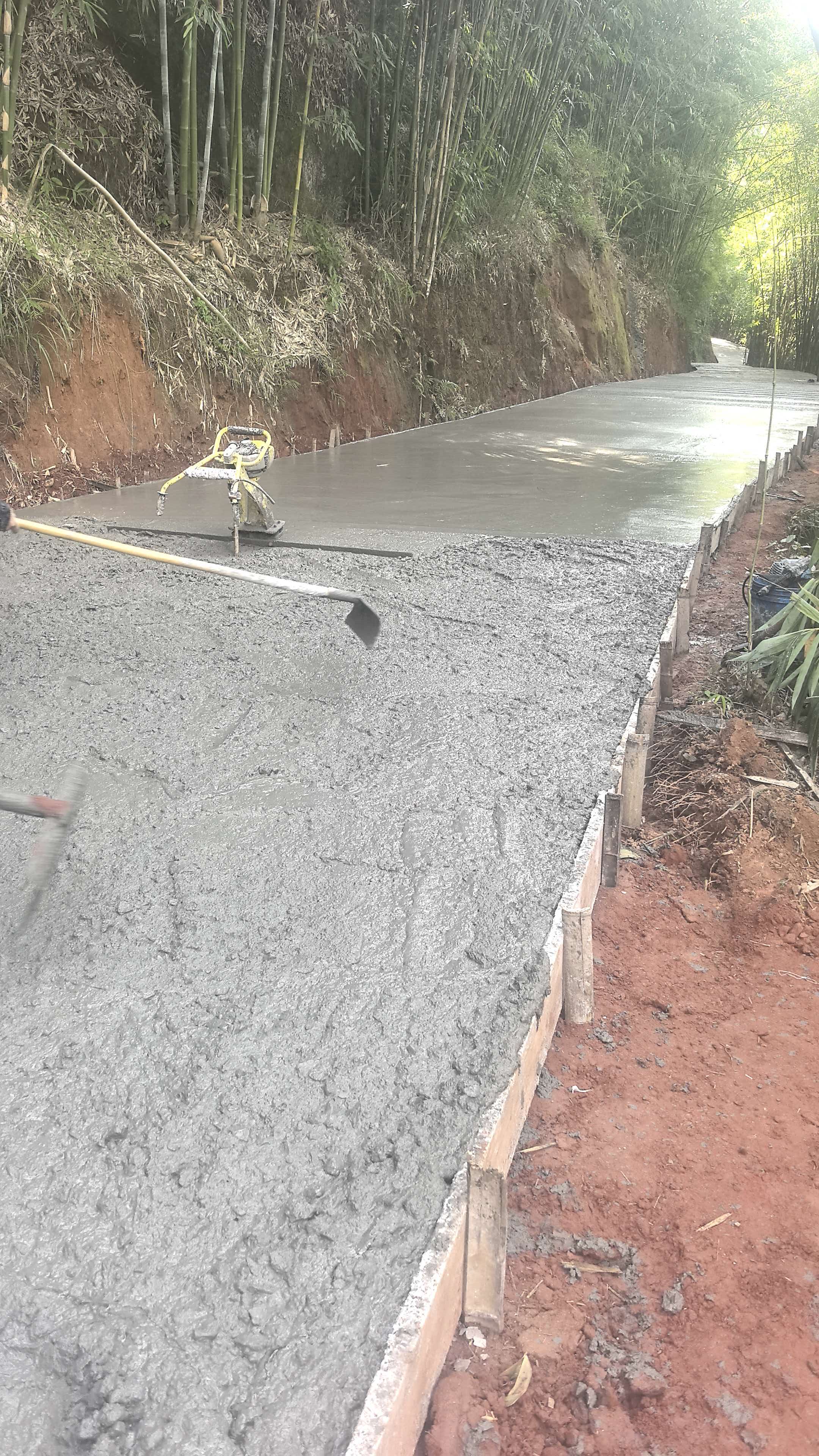
Concrete Pouring for Mountainous Section Road
Segmented Sequential Construction in Narrow Sections, Formwork and Finishing Synchronized
FAQ
Why should segmented flow construction be adopted for road concrete pouring in narrow mountain sections?
Narrow sections have limited working space. Segmented flow construction can break down the construction area into smaller sections, facilitating orderly access and turnover of personnel, equipment, and materials. Each process connects at a fixed rhythm, which can reduce waiting and cross-interference, and lower organizational risks caused by road traffic and slope transportation. Segmented acceptance also facilitates timely correction and prevents problems from escalating.
How exactly should formwork installation and finishing be synchronized on site, and what points should be noted?
Typically progresses by sections: the previous section completes pouring and troweling control before initial setting, while the next section simultaneously prepares formwork and reinforcement, forming a continuous operation chain. Key focus should be on controlling formwork alignment, elevation and bracing to prevent formwork displacement and slurry leakage that would affect edge formation. Troweling timing must be determined based on concrete setting progress—too early causes bleeding, too late causes tearing—and proper joint treatment at connections must be ensured.
How to reduce joint quality and flatness risks during segmented construction?
Segment positions and joint types should be defined in advance, avoiding stress-sensitive and drainage-sensitive areas whenever possible, and ensuring the base layer is properly treated, clean and free of loose material. Edge formation and finishing at segment boundaries must maintain consistent elevation and slope, with temporary edge boards installed when necessary to control edges. Before constructing adjacent segments, inspect and repair completed sections to ensure connections are free of steps, cracks, honeycombing and surface voids.